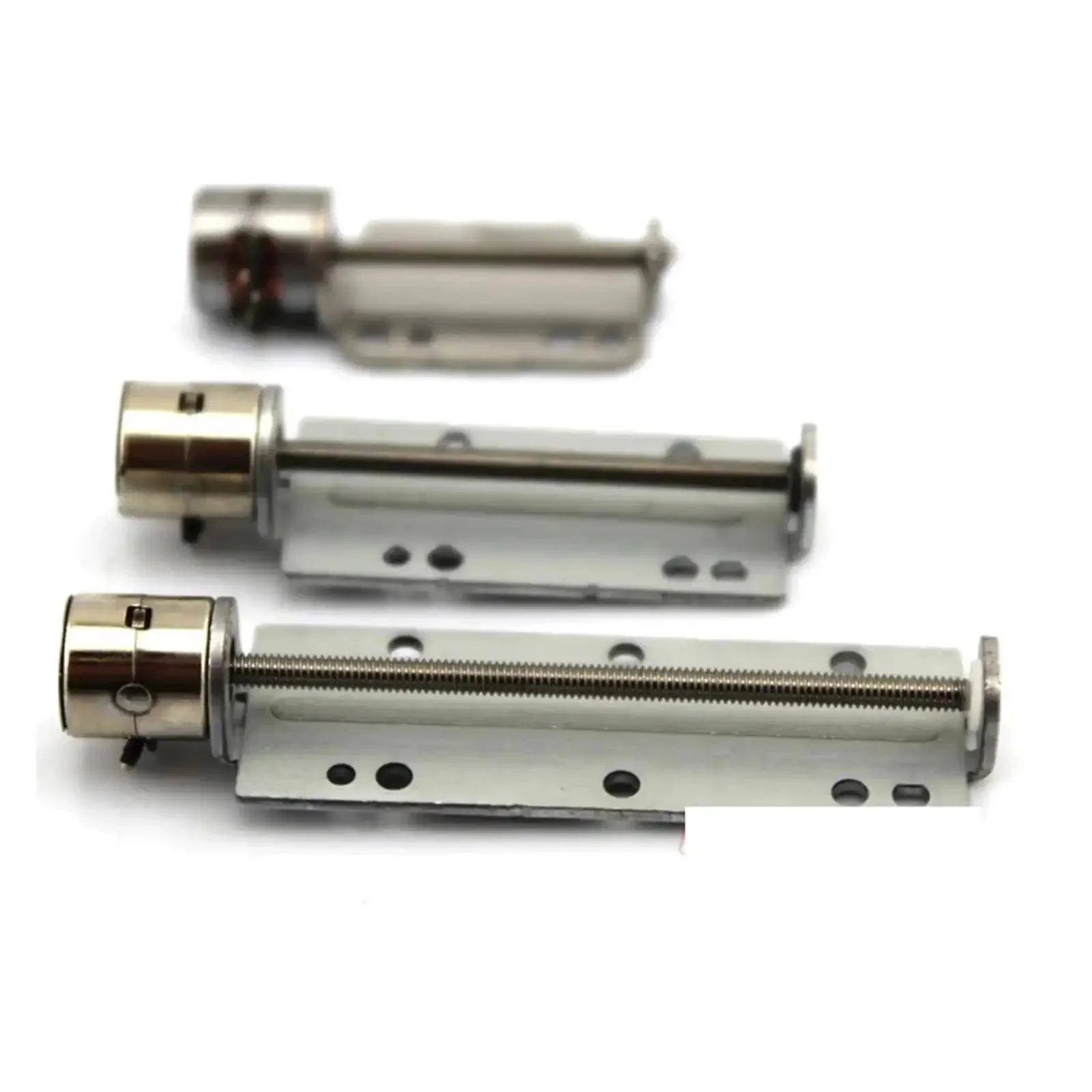


50mm Precision Screw Slide Stepper Linear Actuator for CNC and Robotics, 5V DC, 2 Phase 4 Wire, Long Travel Stroke, Smooth Motion, Low Backlash, The Go To Choice for 3D Printers, Milling, and Automation Projects
✔️ 50mm stroke, 5V DC, 2-phase 4-wire, low backlash for smooth CNC motion
This linear actuator is a stepper motor-driven device that converts rotary motion into precise linear movement, commonly used in CNC machines, robotics setups, 3D printers, and automation tasks to handle positioning and control.
✅ 50mm travel stroke for extended reach in projects✅ 5V DC power supply for easy integration with electronics
✅ 2-phase 4-wire configuration for reliable stepper operation
✅ Low backlash design ensures smooth, accurate motion
💡 What makes stepper linear actuators ideal for precision automation systems? A stepper linear actuator offers controlled, step-by-step movement that's essential for accurate positioning in machinery. - Provides exact control without feedback sensors - Handles high loads in tight spaces - Boosts efficiency in repetitive tasks like milling - Reduces errors compared to standard motors
Product Information
Product Information
Shipping & Returns
Shipping & Returns
Description
✔️ 50mm stroke, 5V DC, 2-phase 4-wire, low backlash for smooth CNC motion
This linear actuator is a stepper motor-driven device that converts rotary motion into precise linear movement, commonly used in CNC machines, robotics setups, 3D printers, and automation tasks to handle positioning and control.
✅ 50mm travel stroke for extended reach in projects✅ 5V DC power supply for easy integration with electronics
✅ 2-phase 4-wire configuration for reliable stepper operation
✅ Low backlash design ensures smooth, accurate motion
💡 What makes stepper linear actuators ideal for precision automation systems? A stepper linear actuator offers controlled, step-by-step movement that's essential for accurate positioning in machinery. - Provides exact control without feedback sensors - Handles high loads in tight spaces - Boosts efficiency in repetitive tasks like milling - Reduces errors compared to standard motors